
RDI Enclosures designs and builds modular E-Houses for industrial, utility, energy, and infrastructure projects that demand protected electrical systems, efficient installation, and reliable field performance. As part of The RDI Group, we bring over a century of engineering, fabrication, and enclosure expertise to complex power distribution projects.
Each E-House is engineered around your unique power distribution requirements, equipment layout, site conditions, and installation plan. By moving fabrication, integration, and testing into one controlled facility, RDI reduces field complexity, improves schedule control, and protects critical electrical equipment.
RDI brings engineering, fabrication, integration, and delivery together through one coordinated process. That gives owners, EPCs, engineers, and contractors a clearer path from design review to field deployment, with fewer handoffs and fewer opportunities for costly field issues.
Our E-Houses are built for long-term serviceability, not short-term convenience. RDI’s welded post-and-beam structural steel frame supports rigidity, replaceable panels, future expansion, and wall-mounted equipment. That’s crucial when facilities need to add controls, expand footprints, replace panels, or update systems over time.
We design with all applicable project requirements in mind, such as standards tied to MBMA, ASCE, and UL 508A where relevant to the scope. Our engineering team can support HVAC sizing, floor loading, equipment packaging, stamped drawings, and installation planning, while our project teams coordinate with stakeholders through every single stage.
To see our work in action, review RDI’s case study and project gallery.
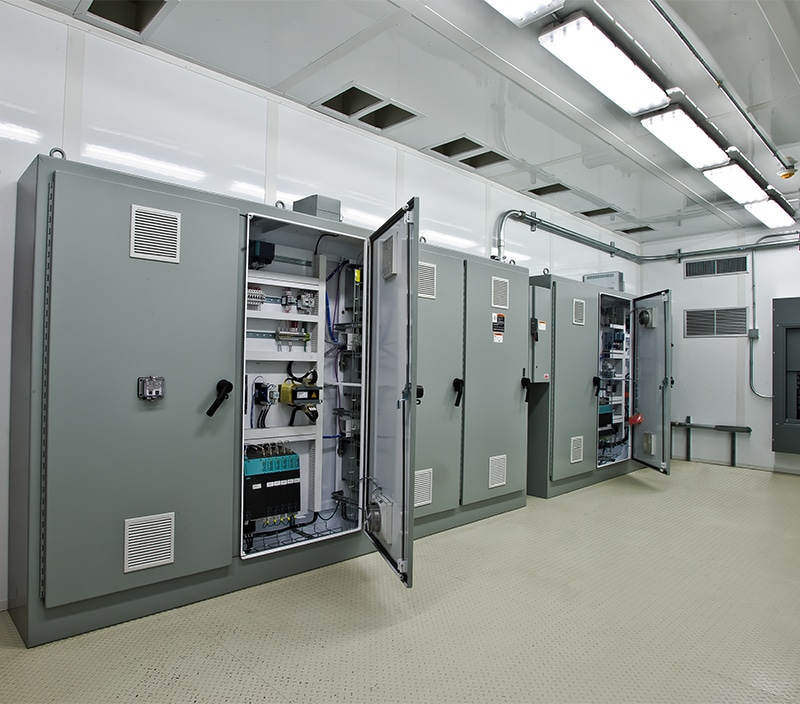
A modular E-House, also called an electrical house or substation building, is a prefabricated electrical building designed to house power distribution equipment. These buildings safeguard switchgear, motor control centers, transformers, control panels, PLCs, and related electrical infrastructure inside a centralized, controlled environment.
As opposed to field-built electrical rooms, modular E-Houses are fabricated off-site, integrated with equipment, and thoroughly tested before delivery. They give project teams a smoother path from design to installation since the major work happens before the building is on-site.
For industrial and utility applications, that’s a powerful advantage. Electrical systems support substations, production lines, remote facilities, data centers, pumping operations, and grid infrastructure, so delays or field changes can impact startup timelines and increase risk.
RDI builds custom prefabricated buildings and E-Houses that bring the building, electrical equipment, controls, environmental systems, and safety features all together in one organized offering.
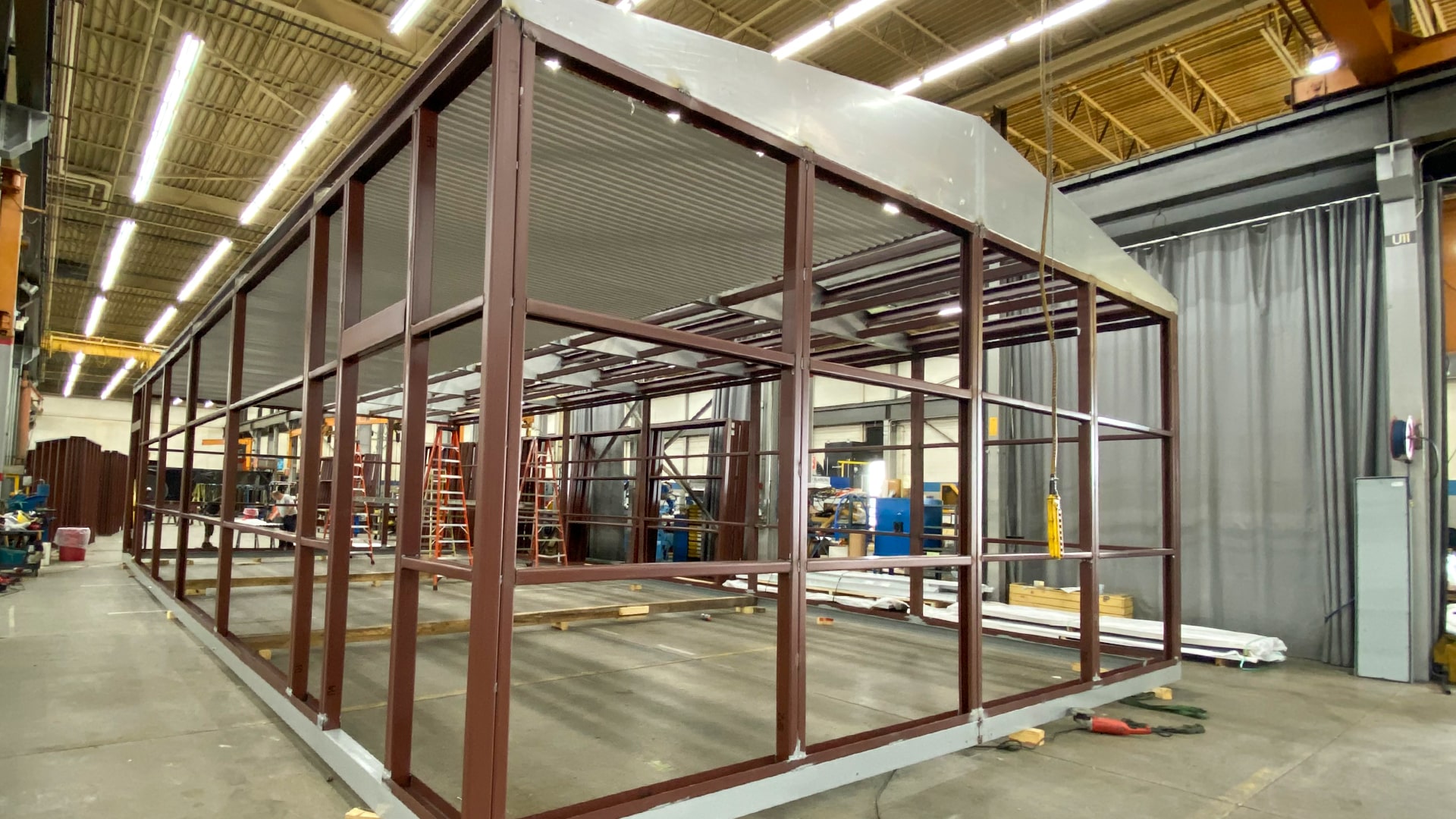
Each modular E-House begins with the electrical requirements. RDI engineers each building around the actual electrical load, equipment configuration, site limitations, access needs, and operating conditions. Our project-specific approach helps prevent problems with fit, clearance, and coordination.
Important design considerations can include equipment spacing, maintenance access, safety clearances, cable entry points, HVAC, ventilation, corrosion resistance, and wind, snow, seismic, or environmental loads. RDI plans for the integration of switchgear, MCCs, control systems, and other power distribution equipment.
We work with EPC firms, engineers, owners, contractors, and other stakeholders to align the building design with the broader project plan. With our design and engineering services, teams can move through changes efficiently and eliminate coordination gaps between engineering, fabrication, integration, and delivery.
Modular E-Houses help projects move faster because building fabrication happens while the site is being prepared. In traditional construction, multiple trades work in sequence on-site, with weather, labor availability, equipment delivery, inspections, and access issues all stalling progress.
But with modular construction, much of that work shifts off-site. RDI can fabricate the structure, install building systems, integrate electrical equipment, and complete testing all in a controlled setting. Once delivered, the E-House can be set in place and connected with less labor than a conventional build.
Our approach allows for faster startup, fewer field variables, more consistent quality, reduced rework, safer installation, and greater schedule control. RDI’s custom modular buildings are built to meet all structural, electrical, and environmental needs while helping teams energize critical systems and mitigate risk.
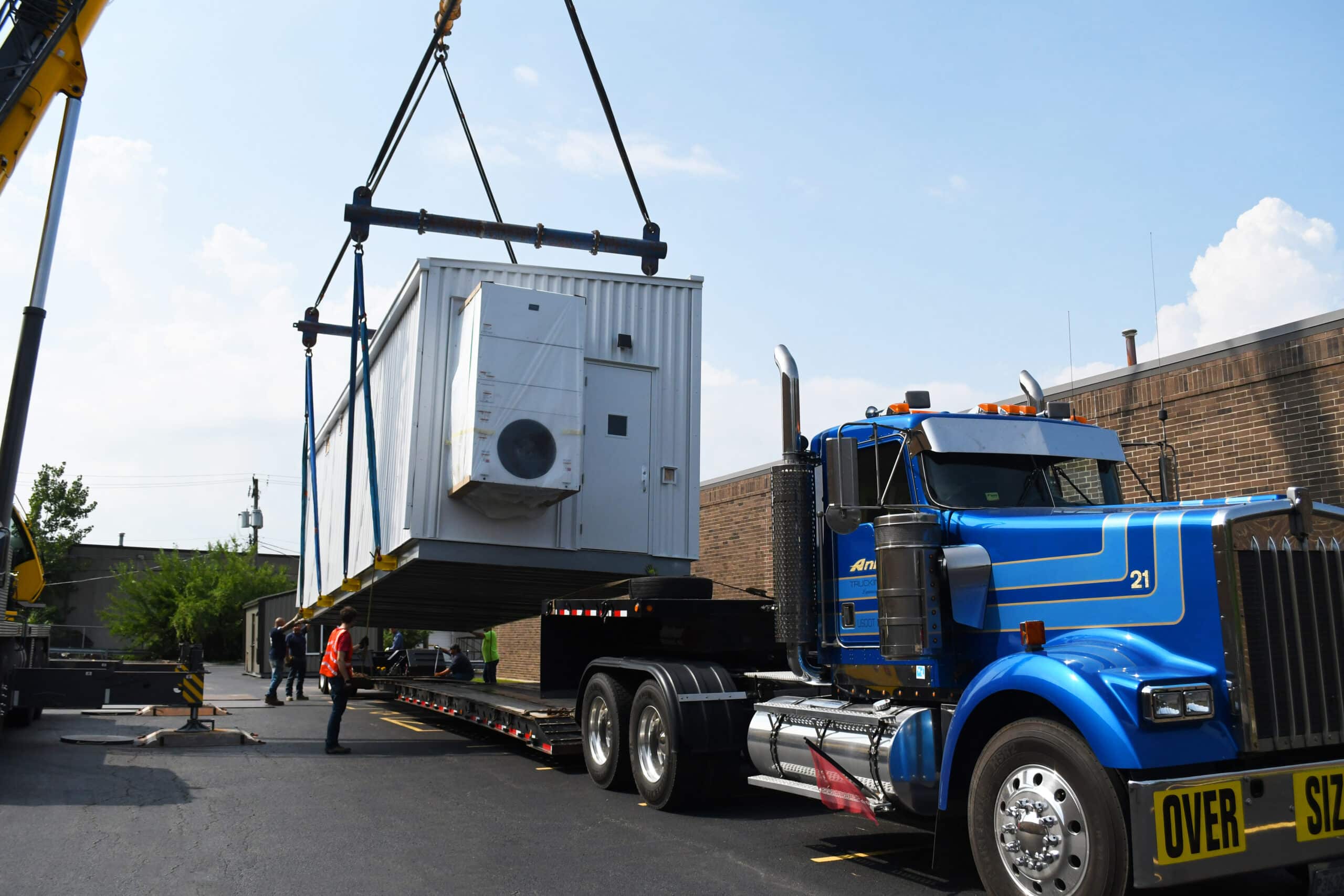
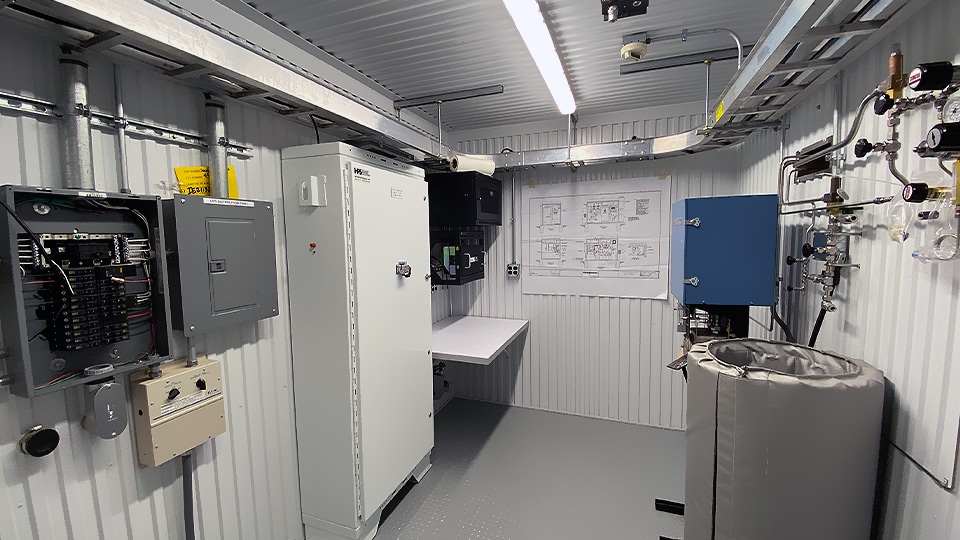
Modular E-Houses are used everywhere critical electrical systems demand protection, centralization, and access. RDI assists projects across several industries, each with different site conditions, operating requirements, and equipment needs.
For electric utilities, modular E-Houses support substations, grid infrastructure, relay protection, and power distribution systems. In oil and gas, they power remote processing sites, pumping operations, control systems, and field infrastructure.
For the mining industry, they protect electrical systems in harsh or remote locations. In prefabricated data centers, they house switchgear, controls, backup power systems, and other infrastructure tied to uptime and scalability.
Industrial manufacturing facilities use modular E-Houses for plant operations, automation, process equipment, and motor control systems. Renewable energy projects use them to house electrical and control systems for collection, conversion, and grid connection.
Across all these applications, the goal stays the same: protect power equipment, streamline installation, and centralize electrical systems in a building made for the job.
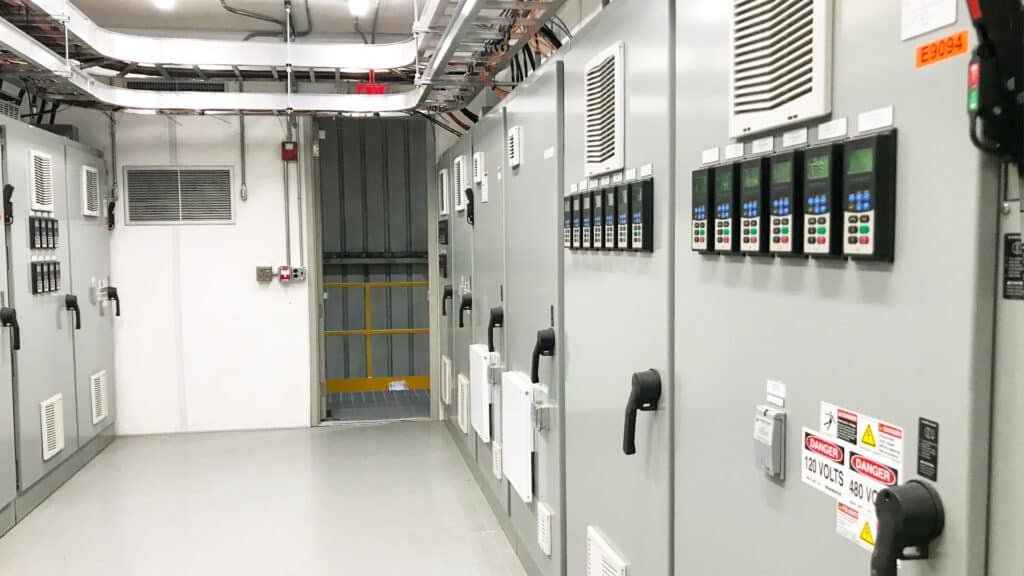
Depending on the project, RDI supports switchgear, MCCs, transformers, control panels, PLC systems, SCADA systems, monitoring equipment, automation controls, wiring, lighting, cable management, HVAC, ventilation, fire protection, grounding, sound attenuation, weatherproof construction, and secure access.
Pre-integration is one of the primary reasons why industrial teams choose modular E-Houses. Wiring, equipment placement, controls, building systems, and safety features can all be completed before the structure leaves the facility, and systems can be tested before delivery, reducing commissioning time.
RDI continues to assist projects after delivery through onsite services, bridging the gap between factory completion and field installation.
Successful modular E-House projects start with a clear understanding of your electrical systems, site conditions, schedule, and operating needs. RDI works with project teams proactively to determine the right structure, layout, materials, integrated systems, and delivery plan.
Whether you’re planning for a new build, upgrading aging infrastructure, expanding a facility, or coordinating a complex industrial project, RDI delivers design, engineering, fabrication, integration, delivery, and installation assistance.
Contact us to start planning your modular E-House project.
Modular E-Houses minimize installation time, improve quality control, lower on-site labor needs, and reduce field issues by allowing systems to be built and tested before delivery.
Yes. Modular E-Houses are often customized around electrical load, equipment layout, site conditions, access needs, environmental factors, and safety requirements.
Modular E-Houses are frequently seen in electric utilities, oil and gas, mining, industrial manufacturing, data centers, renewable energy, and power equipment applications.
RDI supports quality and performance through in-house engineering, controlled fabrication, system integration, and pre-delivery testing. Each modular E-House is reviewed around the project’s equipment layout, structural requirements, HVAC needs, floor loading, access points, and field conditions. RDI’s welded post-and-beam structural steel frame supports long-term rigidity, serviceability, and future adaptability, giving project teams a field-ready electrical building to protect critical equipment and reduce installation issues.
We use cookies to improve your experience on our site. By using our site, you consent to cookies.
Manage your cookie preferences below:
Essential cookies enable basic functions and are necessary for the proper function of the website.